


Anuja Tripathi, PhD

Postdoctoral Fellow in Chemical and Biological Engineering at Northwestern University, and former President’s Postdoctoral Fellow at Georgia Tech.

She engineers electrochemical interfaces for critical minerals recovery and biomaterials, and builds techno-economic and life cycle models of battery recycling.

Northwestern University logoNorthwestern UniversityGeorgia Tech logoGeorgia TechUniversity of Alberta logoUniversity of Alberta
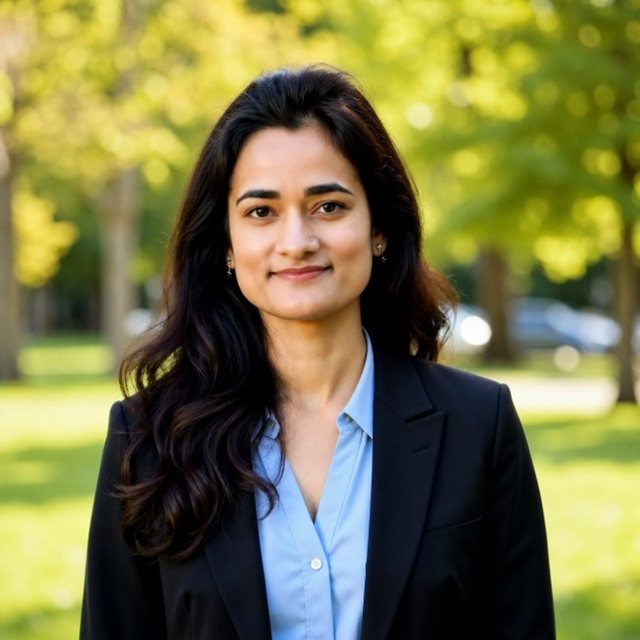
Portrait of Anuja Tripathi
13peer-reviewed papers, nine as first author
20+media outlets have covered her work
>$300Kraised in competitive fellowships
2inventions protected, a patent application in antimicrobials and a disclosure in critical minerals recovery

Electrochemistry at interfaces, from critical minerals to biomaterials

Separations and critical minerals recovery lead her program. Antimicrobial surfaces and biosensors grew from the same electrochemical toolkit.

Every project she has led turns on the same question: how ions move to a surface and react there. Etching and electrodeposition gave her antibacterial steel, and electrocatalytic thin films gave her enzyme-free sensors. That same control over surface reactions now drives selective rare earth separation.

Her training also spans both halves of the path from lab to plant. At Georgia Tech she developed an acid-free electrochemical process that separates rare earths from coal ash. At Northwestern, in a separate study, she builds techno-economic and life cycle models that test whether battery recycling routes can compete with virgin production.

Research directions

  1. Selective electrochemical separationsExtend ionic-liquid electrodeposition from coal ash to mixed rare earth and battery streams, with selectivity designed in at the electrode.
  2. Systems-guided process designBring techno-economic and life cycle analysis to the start of a project, so cost and footprint shape which solvents and operating conditions get tested.

Research

Four projects in two groups. The first pair addresses critical minerals and sustainability, and the second applies the same surface electrochemistry to biomaterials and biosensing.

Critical minerals and sustainability

Georgia Tech logoGeorgia Tech

Rare earth separation from coal ash

Separating one rare earth from another is the hardest step in recovery. Her acid-free process uses a reusable ionic liquid as both extractant and electrolyte, then tunes the applied voltage to electrodeposit neodymium on its own or a broader mix of rare earths. Reusing the solvent avoids the strong acids used in conventional leaching.

Environmental Science & Technology, 2026. Funded by the U.S. Department of Energy.

+ Li spent EV battery modulefresh LFP cathode

Northwestern University logoNorthwestern University

The cost and footprint of recycling LFP batteries

Techno-economic analysis and life cycle assessment of direct recycling for lithium iron phosphate batteries. Her process models, built with GREET and EverBatt, compare the cost, energy use and emissions of regenerating cathode material against virgin production for the wave of EV batteries now reaching end of life.

Manuscript in preparation. Advised by Jennifer Dunn and Jeffrey Lopez.

Biomaterials and biosensing

Georgia Tech logoGeorgia Tech

Steel that kills bacteria

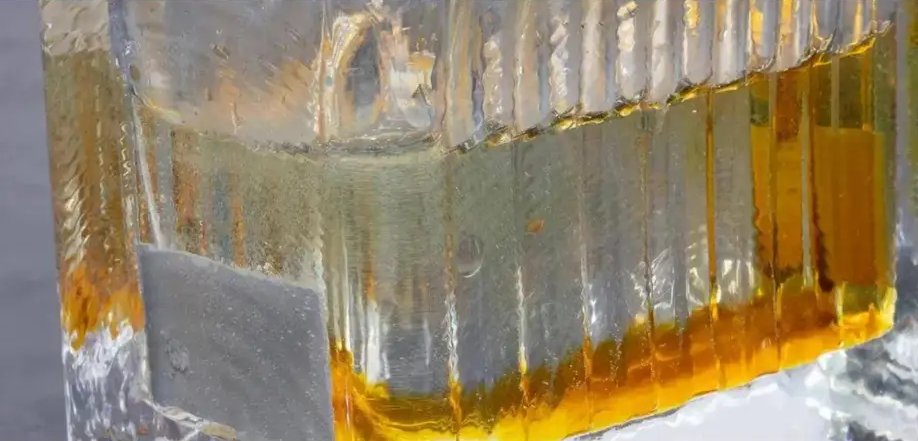
An electrochemical etch grows needle-like nanostructures on stainless steel, which are then coated with copper. The surface ruptures bacteria physically and attacks them chemically, with no antibiotics. It also resists fungi and supports bone-cell growth for implants.

Small, 2024. Patent application filed.

lowhigh reader

University of Alberta logoUniversity of Alberta and NRC Canada

Enzyme mimics for low-cost sensing

Her doctoral work developed nanostructured nickel oxide films, grown by glancing angle deposition, that behave like natural enzymes. They power inexpensive colorimetric and electrochemical sensors for uric acid and xanthine, including a test for fish freshness.

Published in ACS Omega and PLoS ONE, among others.

Toolkit

  • Techno-economic analysis
  • Life cycle assessment
  • GREET and EverBatt
  • BioSTEAM and ASPEN
  • COMSOL
  • Electrochemistry
  • Glancing angle deposition
  • SEM, XPS, XRD and TEM
  • ICP-MS and NMR
  • Coin-cell batteries
  • Cell-free biosensors
  • mRNA lipid nanocapsules
  • Machine learning (Random Forest, SHAP)

Funding

More than $300,000 raised in personal fellowships, and a contributor to proposals worth $3M over two years.

  • President’s Postdoctoral Fellowship
  • U.S. Department of Energy
  • National Science Foundation
  • Georgia Research Alliance

Publications

Thirteen peer-reviewed papers, nine as first author, spanning environmental engineering, biomaterials, materials chemistry and analytical sensing.

  1. 2026

    Electrochemical recovery of rare earth elements from coal fly ash using ionic liquids as both extractant and electrolyteIn the news

    Tripathi A., Liu T., Bozeman J., Huang C.H., Xie X. Environmental Science & Technology

  2. 2026

    Drinking water disinfection using nutritional level zinc assisted with electric field treatment

    Wang W., Jarin M., Khan F., Mo F., Wang S., Bian K., Tripathi A., Pinto A.J., Xie X. Environmental Science & Technology

  3. 2026
  4. 2026
  5. 2025

    Advancing mRNA delivery: surface engineering of hybrid lipid nanocapsules with L-histidine to circumvent immune response

    Yadava S., Tripathi A., Kabilan M., Champion J., Cicerone M. Journal of Controlled Release

  6. 2025

    Enhancing bacterial adhesion with hydro-softened chitosan filmsMentee first author

    Seo H., Yu X., Tripathi A., Champion J., Harris T. ACS Macro Letters

  7. 2025
  8. 2025

    Copper nanocubes as low-cost enzyme mimics in a sarcosine-sensing reaction cascade

    Tripathi A.*, Styczynski M. Analyst (corresponding author)

  9. 2024

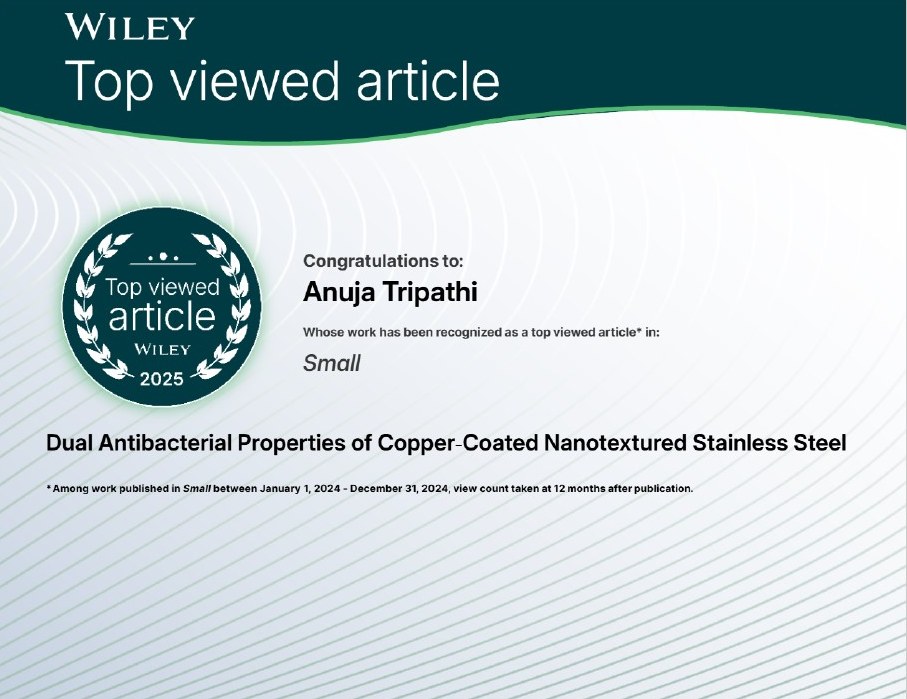
    Dual antibacterial properties of copper-coated nanotextured stainless steelWiley Top Viewed Article 2025

    Tripathi A., Park J., Pho T., Champion J. Small, 2311546

  10. 2022

    Amperometric determination of xanthine using nanostructured NiO electrodes loaded with xanthine oxidase

    Tripathi A., Elias A.L., Jemere A.B., Harris K.D. ACS Food Science & Technology 2(8), 1307-1317

  11. 2021
  12. 2020
  13. 2014

    Parametric studies for in-house resins for hardness removal

    Tripathi A.. Emerging Trends in Chemical Engineering 1(3), 34-39

In preparation

  • Techno-economic analysis and life cycle assessment for direct recycling of LFP batteriesTripathi A., Lopez J., Dunn J. Northwestern University.
  • Water affects the ionic liquid double layerTripathi A., Liu T., Bozeman J., Huang C.H., Xie X. Georgia Tech.
  • Atomic-layer-deposited catalysts on titanium suboxide reactive electrochemical membranes for PFOA and PFBA oxidationMisal S., Tripathi A., Nadeali A., Sparks K., Duan J., Kang D., Lee, Dunn, Chaplin B., Elam J.

Patents

  • Dual antibacterial properties of copper-coated nanotextured stainless steelTripathi A., Champion J. Patent pending, filed June 2024, Application No. 63/682,007.
  • Integrated ionic liquid-based extraction and electrochemical recovery of metals from wastesHuang C.H., Xie X., Tripathi A., Liu T. Invention disclosure submitted February 2026.

In the news

Her rare earth process and her antibacterial steel drew coverage from science and industry outlets across North America and Europe.

May 2024 · Small

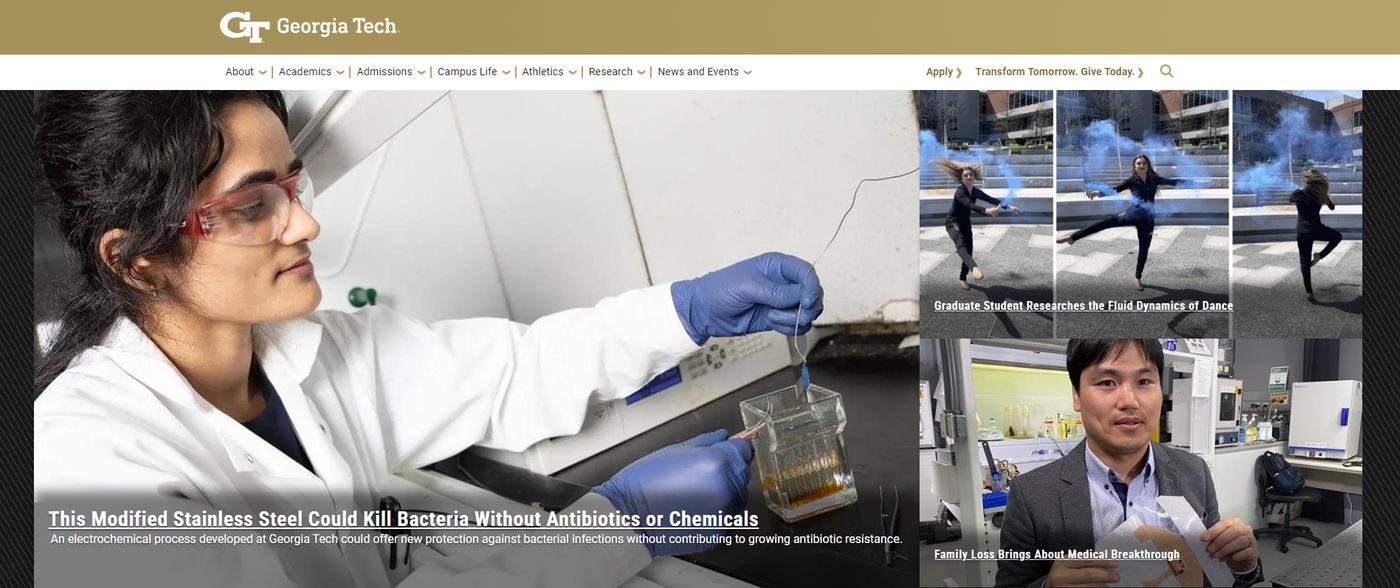
This modified stainless steel could kill bacteria without antibiotics or chemicals

Her copper-coated nanotextured steel was picked up by New Atlas, Phys.org, Interesting Engineering and the British Stainless Steel Association, among others. In 30 minutes the surface cut E. coli by 97% and Staphylococcus by 99%, as reported by New Atlas. It offers a drug-free answer to antimicrobial resistance, which directly killed 1.27 million people in 2019.

An E. coli outbreak linked to grocery stores in Calgary, Canada, helped drive her to target bacteria that cling to surfaces, as she told Interesting Engineering.

June 2026 · Environmental Science & Technology

Rising from the ashes: a hidden supply of critical elements

The U.S. stores about 2 billion tons of coal fly ash. Her reusable ionic-liquid process recovered nearly half of the available neodymium in lab tests, without corrosive acids, pointing to a domestic source of the magnets inside EV motors and wind turbines.

“The beauty of this system is that it works beyond the limits of water.”

She grew up in Kanpur, India, where fly ash from a nearby power plant settled on her family’s rooftop.

Coverage

Also covered by Fast Company, Technology Networks, Tech Xplore, Healthcare-in-Europe, Lenta.ru, Gazeta.ru and Mirage News.

Features and recognition

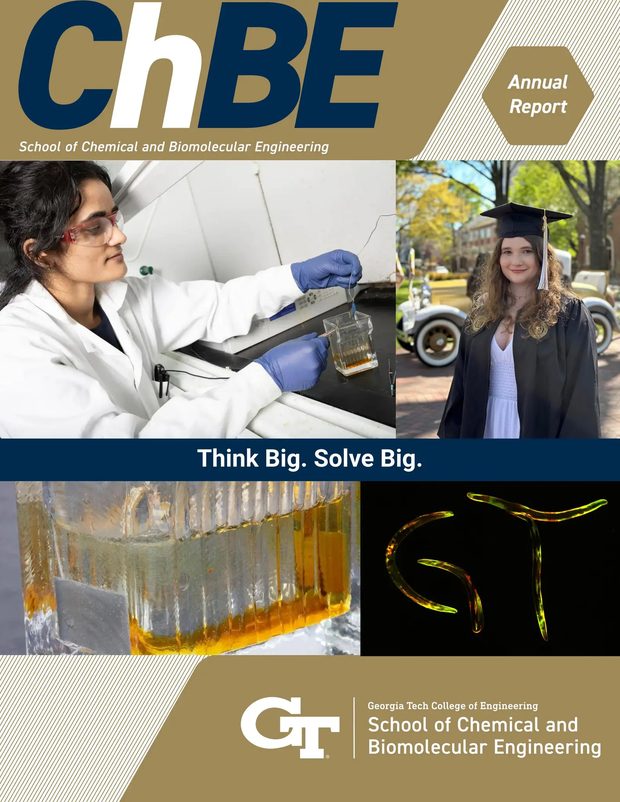
Cover of the ChBE Annual Report
Cover of the ChBE Annual ReportGeorgia Tech School of Chemical and Biomolecular Engineering
Wiley Top Viewed Article, 2025
Wiley Top Viewed Article, 2025Her Small paper on copper-coated nanotextured steel ranked among the journal’s most viewed work of 2024
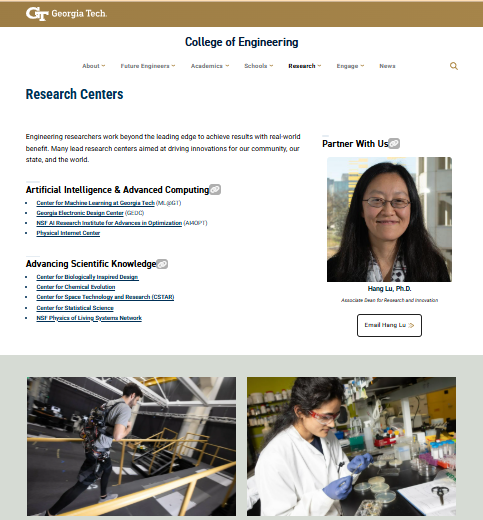
Featured on the College of Engineering Research Centers page
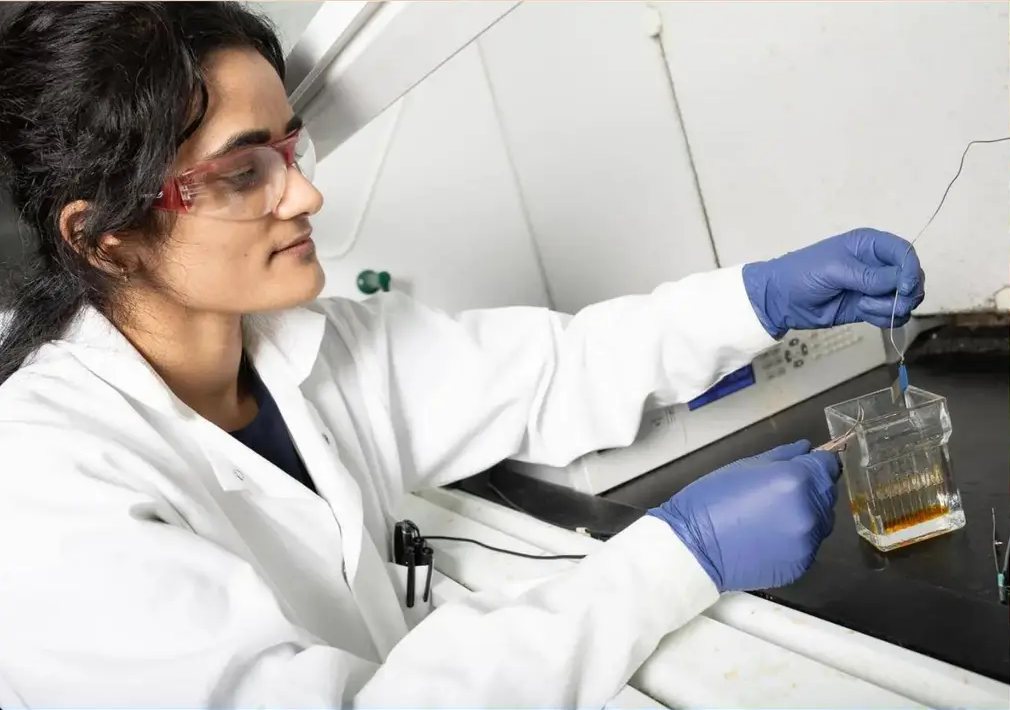
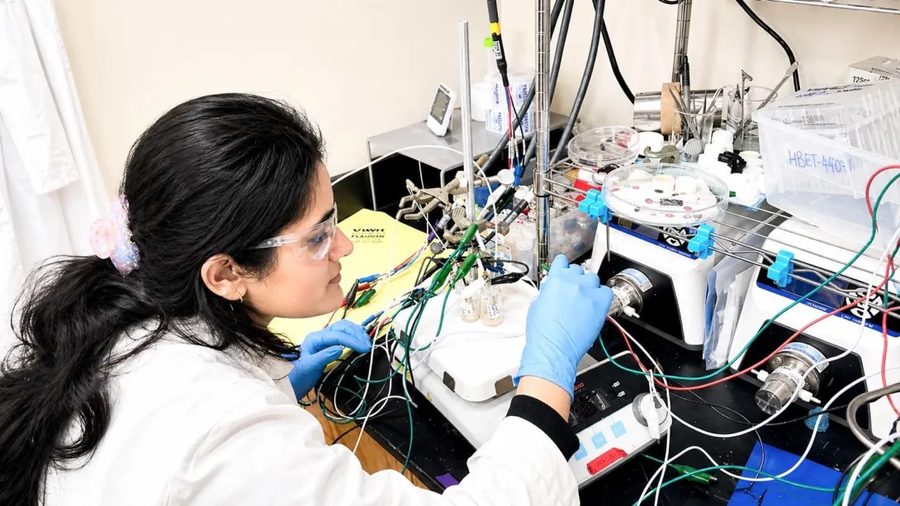
Featured on the College of Engineering Research Centers pageHer lab photo represents Georgia Tech engineering research
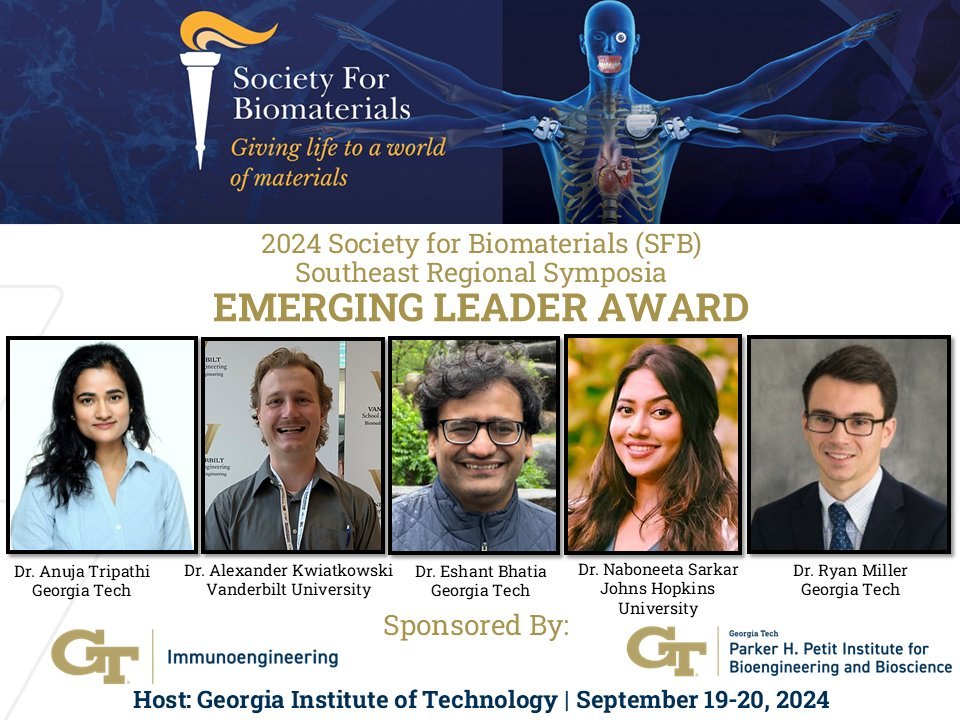
Emerging Leader Award, Society for Biomaterials
Emerging Leader Award, Society for Biomaterials2024 Southeast Regional Symposia, hosted by Georgia Tech
Also featured on gatech.edu
Also featured on gatech.eduThe steel story ran at the top of Georgia Tech’s homepage, May 2024

Selected awards

More than 20 awards and competitive fellowships, earned in India and North America.

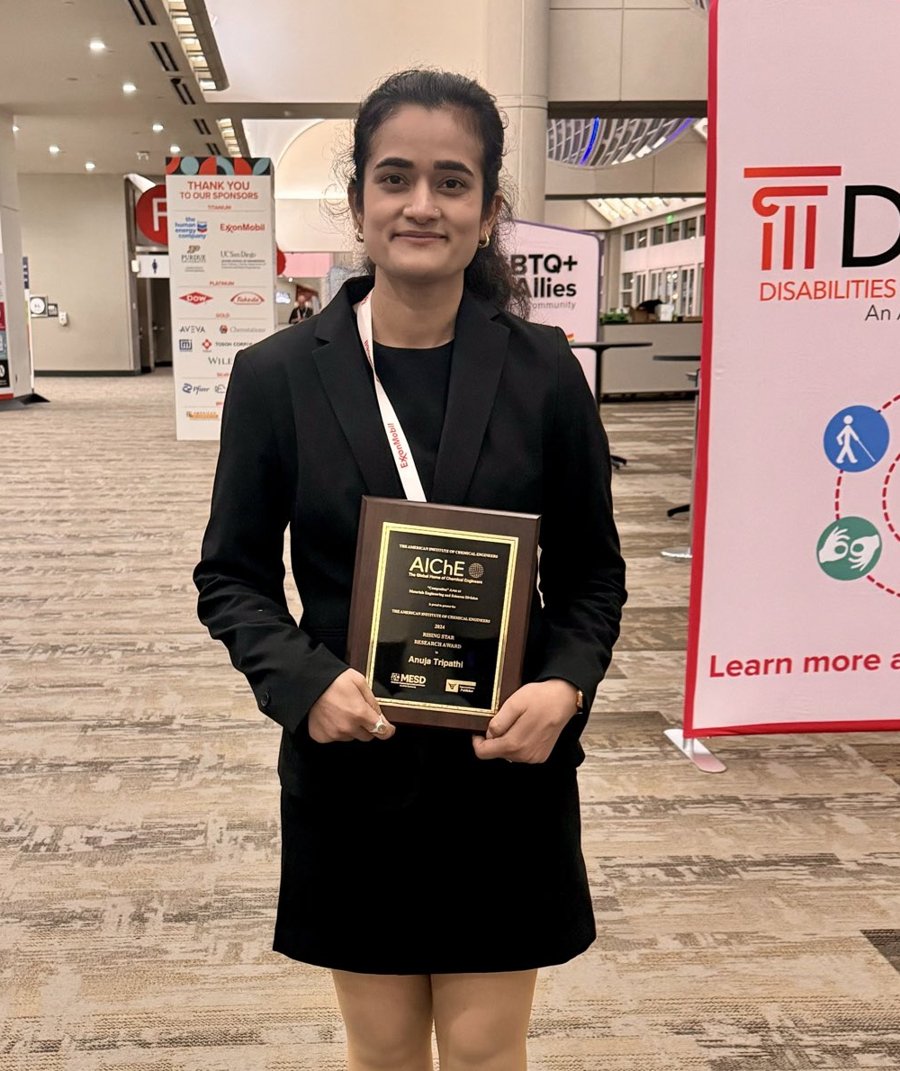
Rising Star Research Award
Rising Star Research AwardReceiving the plaque from the AIChE Materials Engineering and Sciences Division at the 2024 AIChE Annual Meeting
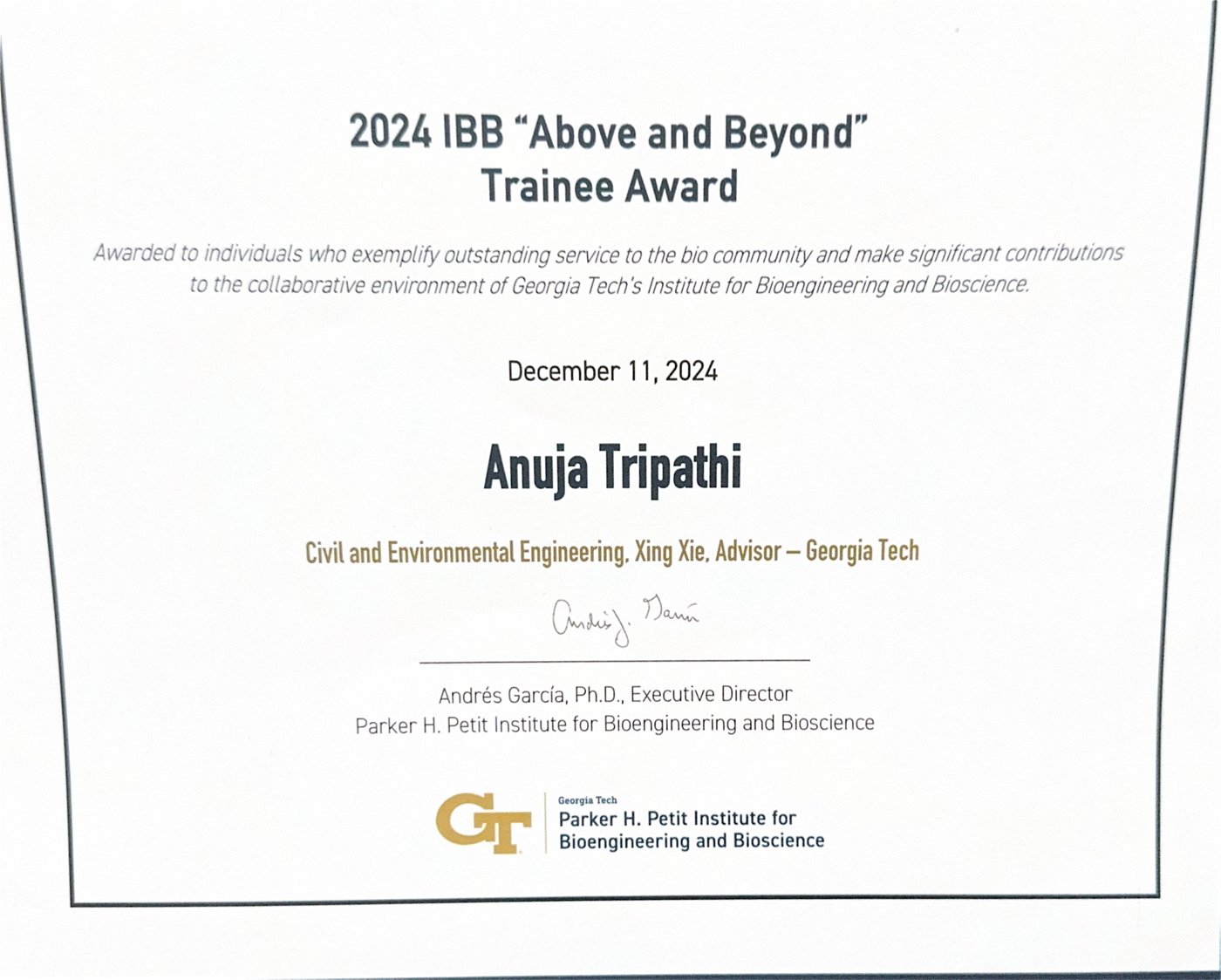
Above and Beyond Trainee Award
Above and Beyond Trainee AwardGeorgia Tech’s Petit Institute honors trainees for outstanding service to the bio community, December 2024
  • Distinguished Young Scholar, DYSSUniversity of Washington, Seattle. Aug 2026
  • Top Viewed Article, SmallWiley. 2025
  • Ramanujan FellowshipAnusandhan National Research Foundation, Government of India, hosted at the Indian Institute of Science. Aug 2025
  • Rising Star Research AwardAIChE Materials Engineering and Sciences Division, Composites area. 2024 Annual Meeting
  • Emerging Leader AwardSociety for Biomaterials, Southeast Regional Symposia. Sept 2024
  • Future Faculty candidate, materials science and soft matterNSF and University of Minnesota. Aug 2024
  • President’s Postdoctoral FellowshipGeorgia Tech. Mar 2022
  • Above and Beyond Trainee AwardParker H. Petit Institute for Bioengineering and Bioscience, Georgia Tech. Dec 2024
  • Rice Academy Fellowship (declined)Rice University. Mar 2022
  • Postdoctoral Leadership and Innovation FellowshipGeorgia Tech. Jan 2023
  • ACS Fall 2023 conference grantAmerican Chemical Society. Jun 2023
  • Women in Chemical Engineering Travel AwardAIChE. Nov 2022
  • AIChE Conference Funding GrantNov 2022
  • Nakatani Research and International Experience mentor awardMentored a student from Japan. Sept 2022
  • Graduate Leadership Development FellowUniversity of Alberta. Aug 2021
  • First place, research image competitionCanadian Biomaterials Society. Jun 2021
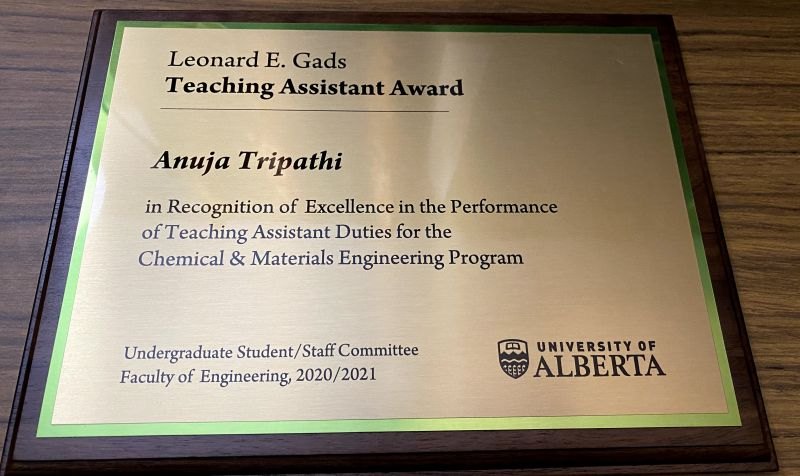
  • Leonard E. Gads Teaching Assistant Award, twiceFaculty of Engineering, University of Alberta. 2020 and 2021
  • Best Woman Performer in R&D (Overseas)International Inspirational Women Awards. Apr 2021
  • T.W. Fraser and Shirley Russell Teaching FellowshipUniversity of Alberta. Jan 2021
  • 3MT and Image of Research semifinalistUniversity of Alberta. Mar 2021
  • Third place, best research posterWaterloo Nanotechnology Conference. Nov 2020
  • J Gordin Kaplan Graduate Student AwardFor exceptional research accomplishments. Apr 2019
  • Graduate Research Assistant FellowshipUniversity of Alberta. Sept 2017
  • Second place, paper presentationInstitute of Chemical Technology, Mumbai. Oct 2016

Service and leadership

  • ChairSustainable Nanotechnology Conference, San Diego, 2025
  • Guest EditorSustainable Development in Functional Biomaterials, MDPI, 2024-present
  • Award ChairWomen in Chemical Engineering, AIChE, 2023-present
  • Session Chair, Next-Gen SensorsAIChE Annual Meeting, Florida, 2023
  • Presider, Nanozymes and BeyondACS Fall Meeting, San Francisco, 2023
  • Member-at-largeWomen in Chemical Engineering, AIChE, 2022-23
  • ReviewerElsevier and ACS journals, 2021-present
  • Committee memberGeorgia Tech Postdoc Association, 2022-present
  • President and VP FinanceUofA Nanotechnology Group, 2019-22
  • Co-coordinatorCampus UNICEF Canada, 2021-22

Selected talks

Invited by chemical engineering departments in the U.S. and India, and a regular speaker at AIChE, ACS, MRS and the Society for Biomaterials.

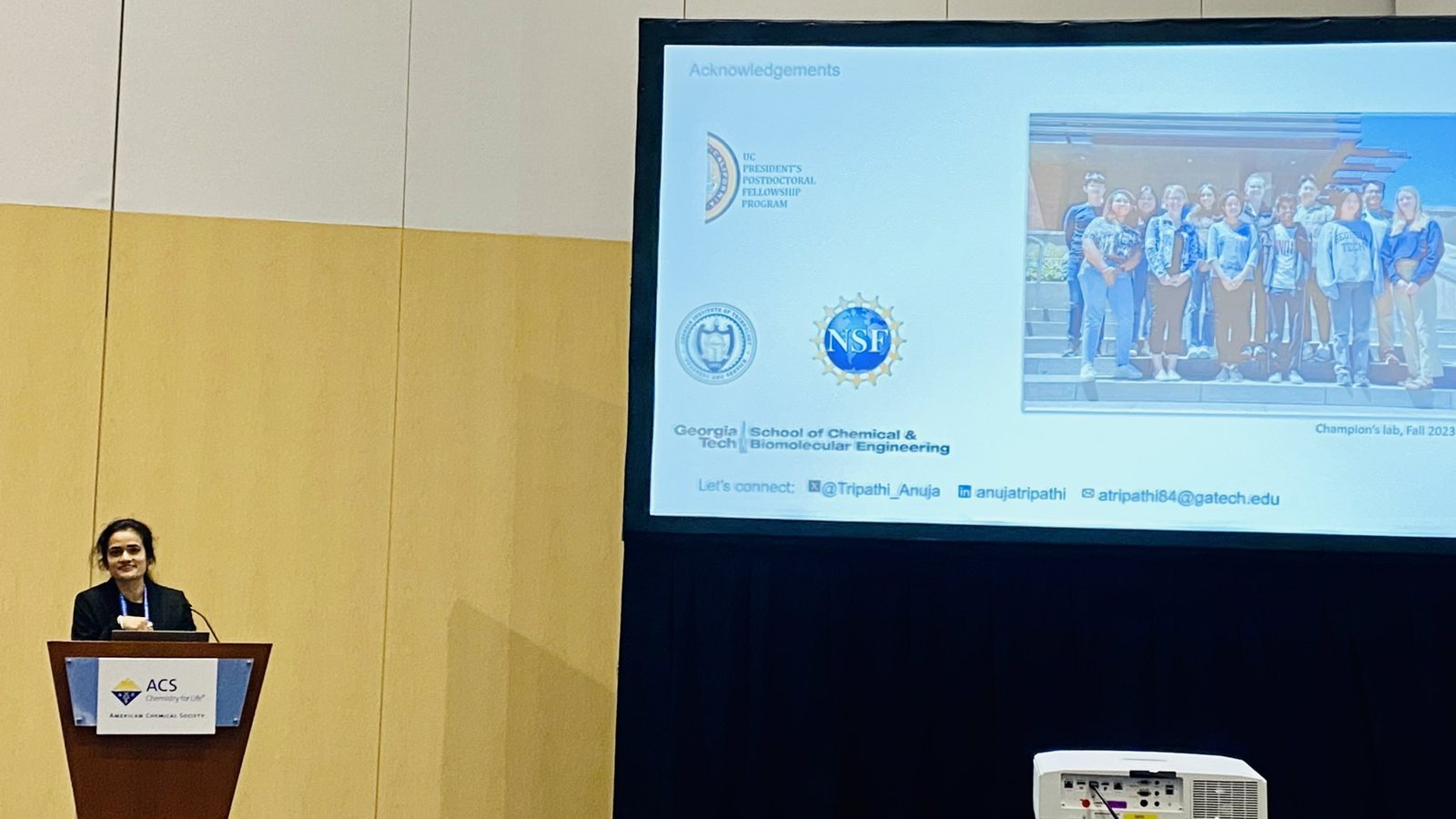
Anuja Tripathi presenting at the American Chemical Society Fall Meeting
Invited talk, American Chemical Society Fall MeetingPresenting her copper-coated nanotextured steel work from the Champion lab at Georgia Tech

Invited department seminars

  • University of Washington, SeattleDistinguished Young Scholars Seminar
    Aug 2026
  • IIT DelhiDepartment of Chemical Engineering
    Apr 2025
  • Louisiana State UniversityCain Department of Chemical Engineering
    Feb 2025
  • South Dakota MinesChemical and Biological Engineering
    Apr 2024
  • Howard UniversityDepartment of Chemical Engineering
    Aug 2023

Conference talks

  • Jul 2026
    Techno-economic and life cycle assessment of direct recycling for LFP battery cathodesNorthwestern University, C3 Symposium
  • Feb 2026
    Strategies to recover critical minerals from waste streamsUK-Southeastern US Critical Minerals Symposium, Atlanta
  • Nov 2025
    Rare earths from coal fly ashSustainable Nanotechnology Conference, San Diego
  • Sept 2024
    Copper-coated nanotextured stainless steel for antibacterial applicationSociety for Biomaterials, Atlanta
    Invited
  • Aug 2024
    Oxidase-like activity of nanotextured steel modified with copper nanozymeACS Fall Meeting, Denver
    Invited
  • Nov 2023
    Ammonia plasma modified NiO nanozymes for colorimetric biosensorsAIChE Annual Meeting, Florida
  • Aug 2023
    NiO nanozymes for peroxidase-like activity in biosensingACS Fall Meeting, San Francisco
    Invited
  • Nov 2022
    Understanding nanomaterials for biosensors and catalystsWomen in Chemical Engineering, AIChE Annual Meeting, Phoenix
    Keynote
  • Dec 2021
    Mesoporous NiO electrodes for enzymatic electrochemical sensing of xanthineMRS Fall Meeting, Boston
  • Feb 2021
    Catalytic activity of high surface area Ni nanozymes for colorimetric biosensorsNational Research Council Canada

Teaching and mentoring

Her mentees have gone on to graduate study at Columbia and careers at Samsung.

  • Zeyang LiPhD student, Georgia Tech, co-mentored, 2025-26
  • Yixuan HuangPhD student, Georgia Tech, co-mentored, 2025-26
  • Hojin SeoUndergraduate, Georgia Tech, 2023-24First author, ACS Macro Letters
  • Abood ShurbjyVisiting undergraduate, UPenn, 2024
  • Simon LeClairUndergraduate, Georgia Tech, from 2024
  • Soomin LeeUndergraduate, Georgia Tech, from 2022
  • Diana OhUndergraduate, Georgia Tech, 2022-23Now at Columbia. AIChE poster first prize
  • Hyerim AhnMaster’s student, 2022-23Now at Samsung, Korea
  • Gabriella LewinskiUndergraduate, Georgia Tech, 2022-23
  • Katherine LinUndergraduate, University of Alberta, 2019-20
  • Sophie ShiUndergraduate, University of Alberta, 2018-19Now a PhD student, UofA
  • CHE 243Co-instructor for Chemical Engineering Thermodynamics at the University of Alberta, after five terms as teaching assistant.
  • 2× awardLeonard E. Gads Teaching Assistant Award, plus the T.W. Fraser and Shirley Russell Teaching Fellowship.
  • 11Students mentored so far, from visiting undergraduates to PhD candidates.
  • CertifiedGeorgia Tech Tech to Teaching course for future faculty, and the UofA Graduate Teaching and Learning Program.
Leonard E. Gads Teaching Assistant Award plaque
Leonard E. Gads Teaching Assistant AwardAwarded by the Faculty of Engineering at the University of Alberta for excellence in teaching assistant duties for the Chemical and Materials Engineering program. She received it in both 2020 and 2021.

Outreach and service

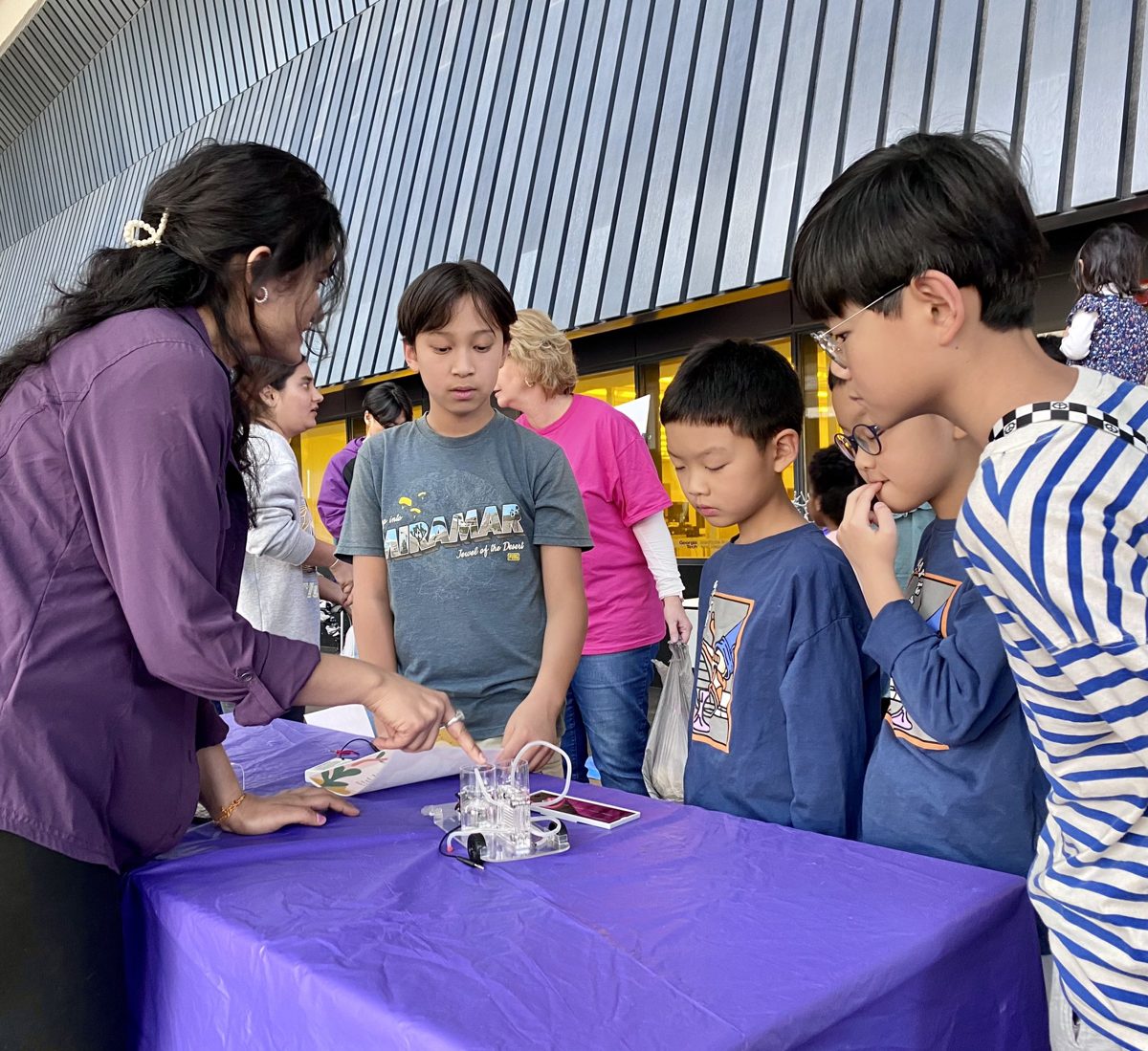
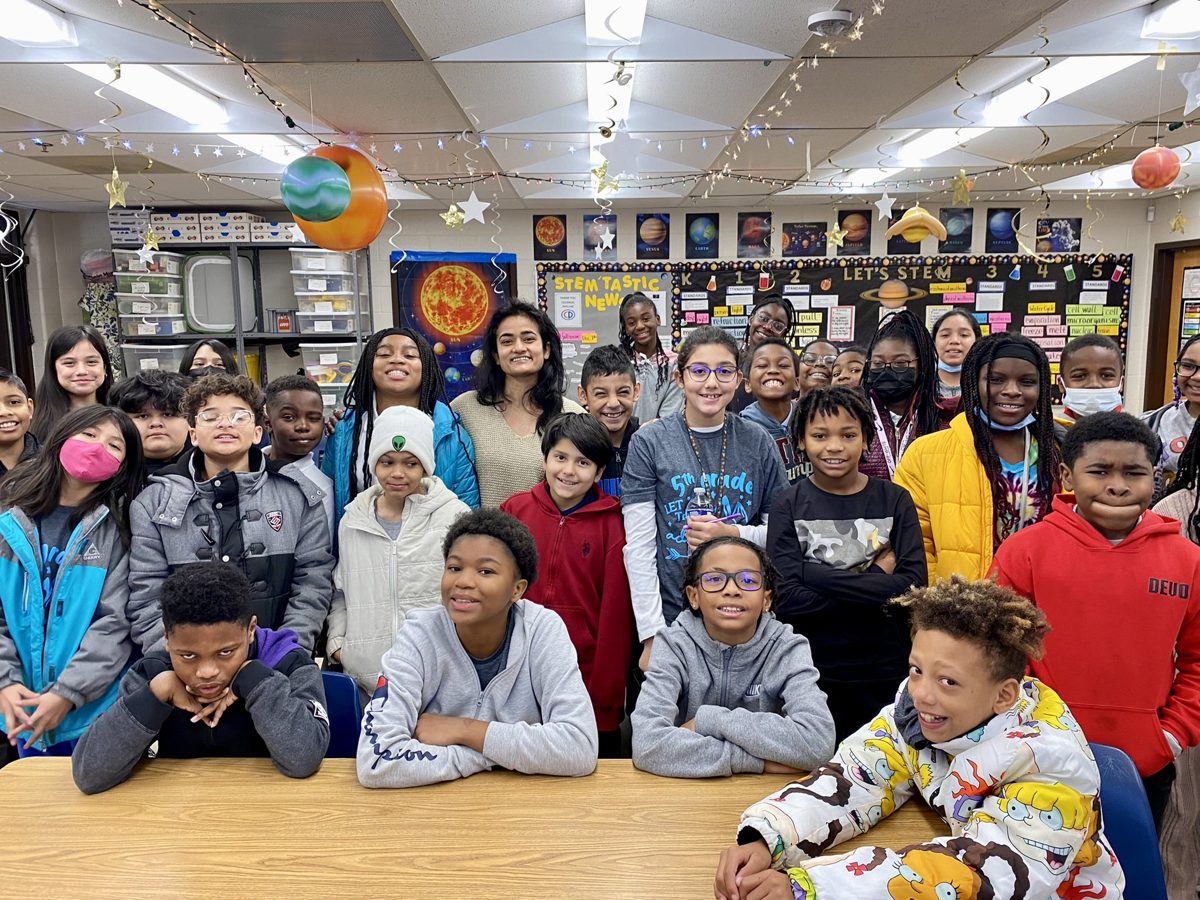
STEM Week speaker at Shallowford Elementary, K-12 InVenture Prize judge, WISEST mentor for women in science, Let’s Talk Science volunteer, and career mentor to undergraduates since 2020.

Showing young visitors how a solar-powered hydrogen fuel cell car works, at a Georgia Tech outreach event
With a fifth-grade STEM class in Atlanta

Academic journey

Training on two continents, from atomic energy research in Mumbai to battery economics outside Chicago.

  1. 2009-2016
    Banasthali University logoIIT (ISM) Dhanbad logo

    India

    • B.Tech at Banasthali University, then M.Tech in Chemical Engineering at IIT (ISM) Dhanbad
    • Research stints at BARC Mumbai and IIT Kanpur
  2. 2017-2022
    University of Alberta logo

    Edmonton, Canada

    • PhD in Chemical Engineering, University of Alberta
    • Thesis on nanostructured NiO biosensors at the NRC Nanotechnology Research Centre
  3. 2022-2026
    Georgia Tech logo

    Atlanta, USA

    • President’s Postdoctoral Fellow, Georgia Tech
    • Rare earth recovery and antimicrobial steel
  4. 2026-present
    Northwestern University logo

    Evanston, USA

    • Postdoctoral Fellow, Northwestern University
    • Battery recycling economics and platinum-free fuel cells

Let’s build what comes next

Anuja is looking for faculty positions in separations and critical minerals recovery, where her work on antimicrobial and sensing surfaces adds a second strength. She welcomes conversations about collaborations and open positions.

Email Anuja

anuja.tripathi@northwestern.edu
Department of Chemical and Biological Engineering
Northwestern University, Evanston, Illinois